

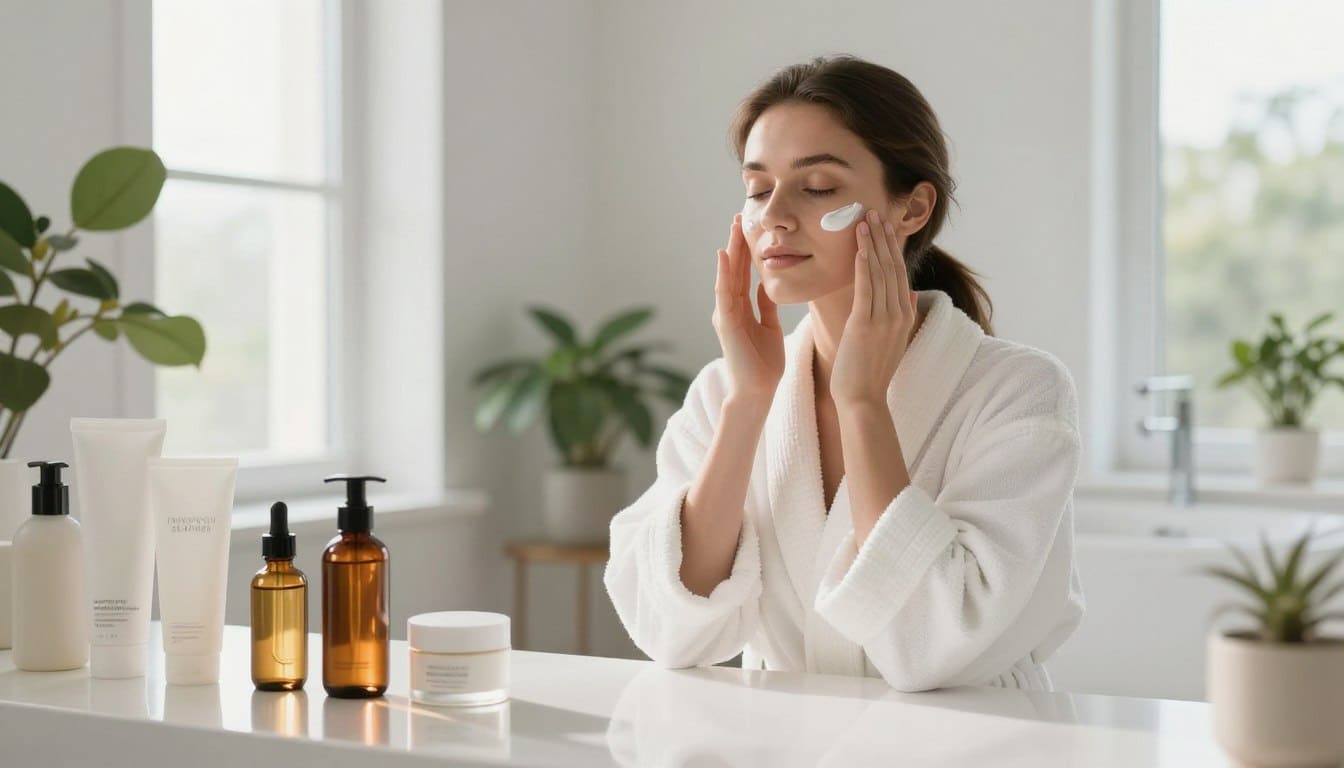
You want clear, steady improvement—not a bathroom shelf full of “holy grails” that let you down. This guide is for serious skincare. It’s about slowing down, simplifying, and sticking with what your skin can actually use.
Social media can pull you in five directions at once. One week it’s a “must-try” serum, the next week it’s a new exfoliant. Your routine never stays stable long enough to work. That’s why results-driven skincare often looks boring at first—but it’s the kind that lasts.
No hype skincare isn’t about doing less care; it’s about doing the right care on purpose. With skincare without trends, you give your skin a steady environment. It’s for hydration, protection, and repair—so it can calm down, adapt, and look more even over time.
Think of serious skincare as a measurable plan rooted in skin biology. A dermatologist-inspired skincare approach focuses on barrier support and sun defense first. Then, it adds targeted steps only when they earn a spot.
If trend-chasing has left you stressed or confused, you’re not alone. A science-backed skincare regimen shifts your mindset. It moves from “What’s next?” to “What does my skin need today?”—and that’s where expert skincare advice starts to pay off.
Key Takeaways
- Serious skincare prioritizes consistency over constant product switching.
- Results-driven skincare works best when your routine stays stable for weeks, not days.
- No hype skincare supports hydration, protection, and repair so your skin can rebound.
- Skincare without trends reduces overwhelm and helps you make clearer choices.
- A dermatologist-inspired skincare mindset starts with barrier care and sunscreen.
- A science-backed skincare regimen helps you track progress and avoid impulse buys.
Why Trend-Driven Skincare Fails and No Hype Skincare Wins
Feeling left behind by constant new skincare launches is common. But, skincare without hype or trends is where real progress happens. Your skin can’t improve if you keep changing your routine.
The goal is not to chase a quick glow. It’s to find skincare products that work and give them time to show results.
How viral ingredients and “must-try” routines create constant product switching
Trend cycles make you swap cleansers, serums, and masks too fast. You try new steps, then change them again when something new comes out.
This pattern makes it hard to find your best skincare routine. Results come from steady use and fewer changes. Simple skincare tips can help: change one thing at a time, track your skin, and keep the rest the same.
When “more actives” backfires: overstimulation, irritation, dryness, and inflammation
Using too many strong products can stress your skin. This can cause tightness, stinging, flaking, redness, and more breakouts.
Even trendy “deep clean” habits can be too harsh. A good cleanser should remove dirt without drying out your skin. This helps your other products work better.
Quick fixes like overnight “tight” or “bright” effects often don’t last. They might hide problems like dehydration or weak skin. This is why people often stop wasting money on skincare too late.
Why skincare without trends supports calmer, more resilient-looking skin over time
Skincare without trends focuses on comfort and hydration. This means your skin reacts less. No hype skincare is about fewer surprises and a routine you can stick to.
Formulas that support your skin’s health fit well here. For example, Venofye Blossom Bee Day Moisturizer is a daily barrier support. It’s not about quick fixes.
| Trend-driven habit | What it can trigger | Skincare without hype or trends alternative | What to watch for |
|---|---|---|---|
| Switching actives every 1–2 weeks | No clear baseline; mixed signals that look like random flare-ups | Keep one active steady and evaluate over a full cycle | More predictable tone and fewer new irritation spots |
| Layering multiple strong exfoliants | Dryness, burning, redness, inflammation | Use fewer actives and prioritize moisture and comfort | Less stinging; makeup sits smoother |
| “Deep clean” cleansing twice a day | Tightness and rebound oil | Gentle cleanse that leaves skin calm, not squeaky | Skin feels soft right after washing |
| Buying the latest launch for a quick fix | Clutter and wasted spending with little progress | Choose skincare products based on repeatable results | Fewer impulse buys; more consistent usage |
Choosing calmer skincare options lets the basics work. Cleanse, hydrate, protect, and repeat. This turns skincare products into tools, not just entertainment. You’ll get closer to finding products that really work.
serious skincare Mindset: Results-Driven Skincare Starts With Consistency
When you commit to results-driven skincare, you stop chasing quick fixes. Instead, you build habits your skin can trust. It’s like training: you wouldn’t swap workouts every day and expect strength to show up fast.
The same mindset is how to build a serious skincare routine. This routine doesn’t fall apart when a new launch hits your feed.
This is also what makes the best skincare routine for consistent results feel almost boring—in a good way. You repeat the basics, watch how your skin responds, and give it room to settle. That patience is what turns a routine into a skincare routine for real results.
Why your skin needs time to adapt instead of constant change
Your skin barrier adjusts slowly. If you keep rotating cleansers, acids, and “miracle” serums, you may never learn what’s helping and what’s harming. That constant switching can leave you stuck in the skincare nomad cycle—drawers full of half-used bottles and no clear progress.
If you’re using premium skincare treatments at home, pacing matters even more. A gentle option like Venofye Blossom Bee Facial Peeling (used once or twice weekly) can support gradual renewal without that stripped, tight feeling. Consistency beats intensity when your goal is steady improvement.
What “real results” look like: gradual improvement in texture, tone, and balance
Real change is usually quiet. Your skin may look more even, feel less reactive, hold hydration better, and develop smoother texture over time. That’s what a skincare routine for real results tends to deliver: fewer bad days, not overnight perfection.
Daily support makes the difference. Pairing a gentle weekly exfoliation with reliable moisture—like Venofye Viperlift Bio Cream with vitamin E, soluble collagen, and squalane—can help your skin look more balanced over months. If you want help reading your skin’s signals, a skincare specialist can also guide you on what to keep steady versus what to adjust.
Real change is usually quiet. Your skin may look more even, feel less reactive, hold hydration better, and develop smoother texture over time. However, if you’ve stabilized your routine and your complexion still feels flat, there might be underlying factors at play. Read our guide on [Why Is My Skin Still Dull? 9 Reasons Your Skin Isn’t Glowing] to identify what’s holding your radiance back.
How to stop wasting money on skincare by avoiding the trend treadmill
To stop wasting money on skincare, focus on what you’ll use every day, not what looks exciting once a week. A streamlined routine you actually follow can outperform a complicated lineup that sits untouched. That’s how premium skincare treatments become an investment instead of an impulse buy.
Use this quick check to decide whether consistency is working—or whether something truly needs to change.
“The beauty of a consistent routine is that it prepares your skin to be the ultimate canvas. When your texture is smooth and hydrated, you’ll notice that achieving a [Captivating Makeup Aesthetic] becomes effortless. Instead of fighting with cakey foundation, your soft glam looks will sit better and last longer because the base—your skin—is truly ready.”
| What you notice | What it may mean | What to do next |
|---|---|---|
| Your skin feels calmer and less tight after cleansing | Your barrier is stabilizing and holding water better | Keep your routine steady for 8–12 weeks before making big swaps |
| Texture looks smoother, and makeup sits better | Gradual turnover and hydration balance are improving | Stay consistent; avoid adding new actives “just because” |
| Redness, itchiness, or stinging increases | Irritation from overuse, layering conflicts, or sensitization | Scale back to basics; consider a skincare specialist if it persists |
| New breakouts show up after a product change | Your skin may be reacting, congested, or overwhelmed | Pause the new item, return to your baseline, and re-test slowly later |
| Excess dryness or greasy shine by mid-day | Barrier imbalance or mismatched product texture | Adjust one step at a time (cleanser or moisturizer), not the whole routine |
| No improvement after consistent use | The formula may not match your goal, or the routine lacks a key step | Reassess your plan for how to build a serious skincare routine with fewer, better-fit products |
When you stick with what works, you don’t need a constant haul to feel in control. That’s the mindset shift: choose a few solid steps, repeat them, and let time do its job. It’s a practical way to protect your budget, sharpen your routine, and keep results-driven skincare on track.
Build a Minimal Skincare Routine That Works With Barrier-First Basics
Your skin barrier is like a shield. It keeps water in and bad stuff out. A simple skincare routine helps it do its job better.
Choosing a minimal skincare routine might seem dull. But it works well because it’s steady. It doesn’t change every week like some products do.
“A strong barrier is the foundation of health, but if you want to take that radiance further, check out our [Get Glowing Skin Simple Tips] for extra steps to achieve that luminous, lit-from-within look that complements your serious skincare routine.”
Core steps that support a strong barrier: gentle cleansing, hydration, moisturizer, sunscreen
A good skincare routine has fewer steps but better basics. Focus on comfort, consistency, and daily protection.
- Gentle cleanse: Use a non-stripping cleanser that rinses clean. Venofye Blossom Bee Clarifying Cream Cleanser is sulfate-free and gentle, helping your skin feel better.
- Hydration: Add a hydrating serum or essence to keep water in. This is great for sensitive skin, where dryness shows up quickly.
- Moisturize: Use a moisturizer that fits your skin type. For oily skin, choose a lighter one but don’t skip it.
- Sun protection: Always use sunscreen in the morning. You can use a dedicated SPF after moisturizer or a moisturizer with SPF like Venofye Orchard Bee Brilliance Cream SPF 30.
Signs your barrier may be struggling: sensitivity, redness, tightness, excessive dryness or oiliness
Barrier stress can make your skin break out or feel off. It can also make your skin look dull or feel rough.
| What you notice | What it often points to | Barrier-first move |
|---|---|---|
| Sensitivity or stinging with products you used before | Overuse of actives, fragrance, or harsh cleansing | Pause actives and stick to gentle cleanse + hydration + moisturizer |
| Redness, itchiness, or irritation that lingers | Inflammation and a weakened protective layer | Use a richer moisturizer and keep routines short for a few weeks |
| Tightness after washing | Water loss from a stripped surface layer | Switch to a milder cleanser and moisturize while skin is slightly damp |
| Excessive dryness or flaky patches | Barrier not holding moisture well | Increase hydration steps and use a creamier moisturizer at night |
| Extra shine or sudden breakouts | Skin overcompensating when it feels unprotected | Keep moisturizer in, avoid harsh scrubs, and simplify your routine |
If you think your barrier is weak, try a reset. Use only a gentle cleanser, a hydrating serum, and a rich moisturizer for a few weeks. This lets your skin settle.
Why a simple skincare routine backed by results can outperform an elaborate one
A complex routine can fail if it has too many strong ingredients. Too many acids, retinoids, and brighteners can irritate your skin. This slows progress and makes it hard to see results.
A simple routine is easier to follow and see results from. Hydration makes your skin smooth, moisturizers strengthen the barrier, and SPF keeps your progress from fading. Over time, this steady approach can become a skincare routine you can stick with.
How to Choose Skincare Products Wisely With Evidence-Based Skincare
Evidence-based skincare focuses on what your skin needs, not what’s trendy. It starts with protecting your skin, keeping it moist, and using ingredients that work over time. This approach makes a big difference between quick fixes and lasting results.

Dermatologist-recommended skincare is simple and effective. It uses proven steps and clear labels, avoiding false promises. When shopping for skincare, start by categorizing products, then choose the best formula for you.
Prioritize proven categories
Sunscreen is essential for protecting your skin from UV damage. Use broad-spectrum SPF 30 or higher and apply it to your face and neck. Sunscreen is key for preventing uneven tone and stubborn discoloration.
Moisturizers are important for keeping your skin hydrated and comfortable. Look for ingredients like glycerin, ceramides, and petrolatum if you have dry skin. For oily skin, choose lighter textures. Barrier support is key for making other products work better.
Antioxidants can help brighten your skin, but they take time. Ingredients like vitamin C, ferulic acid, and vitamin E are good choices. Consistency is key for seeing results.
Retinoids and gentle exfoliation can be effective, but use them carefully. Start with a low dose and gradually increase as your skin gets used to it. Choose products that you can use regularly, not just because they have a strong label.
Match products to your real concerns
Your skin’s needs can change due to various factors like weather, stress, and new medications. Pay attention to how your skin feels after cleansing. If it feels tight, stings, or flakes, your barrier might be stressed. If you have clogged pores or shine, you might need lighter products.
For acne, consider using benzoyl peroxide, adapalene, or salicylic acid. But for severe breakouts, you might need a dermatologist’s help. For hyperpigmentation, like melasma, over-the-counter products can help, but a dermatologist might be needed for stubborn cases.
How to spot marketing traps and “instant results” claims that don’t last
Be wary of claims about quick results. A temporary glow can come from hydration or film-formers, not real change. Products like Venofye Iron Bee Skintight Syringe might promise fast results, but they’re not a long-term solution.
Look for products that support protection, hydration, or repair in a way you can do every day. Avoid products with rare ingredients or secret technology. Stick to basics you can finish, and add advanced products when your skin is ready.
| Category | What it helps you target | What to look for on the label | Common marketing trap |
|---|---|---|---|
| Sunscreen | Prevention, uneven tone, discoloration history, texture changes | Broad-spectrum, SPF 30+, water resistance if you sweat | “SPF in makeup is enough” or “all-day protection” without reapplication |
| Moisturizer | Barrier support, comfort, smoother-looking skin | Glycerin, ceramides, petrolatum, niacinamide (if tolerated) | “Oil-free” framed as always better, even when your barrier is dry |
| Antioxidants | Dullness, early visible aging, environmental stress | Vitamin C derivatives, vitamin E, ferulic acid in stable packaging | “Instant brightening” that’s mainly shimmer or temporary tightening |
| Retinoids | Fine lines, texture, acne support over time | Retinol or adapalene, clear usage instructions, gentle base | High strength pushed as “no irritation,” ignoring the adjustment phase |
| Gentle exfoliation | Clogs, rough patches, uneven surface tone | Low % AHA/BHA, limited frequency guidance, barrier-friendly formula | Daily peeling pads marketed as “poreless skin” in a week |
How to Introduce Actives Safely for an Effective Skincare Routine
Actives can be a smart upgrade, but they work best when your barrier is steady. Think of this as a science-backed skincare regimen you can actually stick with. If you want an effective skincare treatment without the guesswork, build from calm skin first, then add strength in small steps.
Common mistakes: combining too many potent actives or starting too fast
The fastest way to derail an effective skincare routine is stacking new actives in the same week. A common slip is adding a retinoid and a new vitamin C serum too quickly, then tossing in acids “just in case.” That combo can overstimulate your skin.
Once overstimulation starts, the chain reaction is predictable: barrier compromise, then irritation, redness, dryness, inflammation, and sensitivity. For many people, that can also trigger breakouts, which makes a skincare routine for acne feel like it’s “not working.” Then you’re tempted to switch products again, and the cycle keeps going.
- Add one active at a time so you know what helps (and what doesn’t).
- Avoid doubling up on strong categories on the same night when you’re new to them.
- If your skin stings with plain moisturizer, pause actives and reset your barrier.
Practical pacing: how often to use exfoliants or retinoids without burning out your skin
Pacing is the difference between progress and a flare-up. With chemical exfoliants and retinoids, your skin often needs an adjustment period, so “start slow” is more than a slogan—it’s dermatologist-inspired skincare in practice. If your skin gets reactive, you’ll know quickly, and you can stop or scale back before the damage spreads.
| Active step | Starter pace | What to watch for | How to adjust |
|---|---|---|---|
| Gentle exfoliation (Venofye Blossom Bee Facial Peeling) | Once weekly, then up to once or twice weekly | Tightness, stinging, new redness, rough patches | Drop back to once weekly; keep the rest of your routine simple and hydrating |
| Retinoid (for anti-aging skincare goals) | 2 nights per week, non-consecutive | Flaking, burning, persistent dryness | Use fewer nights; apply over moisturizer; avoid pairing with other strong actives at first |
| Vitamin C (for tone and daily antioxidant support) | 2–4 mornings per week | Sting on application, increased sensitivity | Use less often; avoid layering with new acids until your skin is stable |
Why hydration and moisturization help actives perform better
Hydration and moisturization help actives do their job with less drama. When your barrier is healthy and well-functioning, retinoids and vitamin C tend to perform better, which keeps your routine in a virtuous circle: fewer setbacks, steadier results, and less temptation to chase trends.
This also fits natural skincare preferences, because you can focus on gentle, supportive basics while using targeted actives. Keep the barrier-first rule in place even if you later explore in-office options—your skin handles advanced steps better when the foundation is strong, and your daily routine stays consistent.
Skincare Routine for Real Results Requires Time, Tracking, and Realistic Expectations
A skincare routine for real results is about steady effort, not quick fixes. If social media makes you feel like you’re falling behind, remember this: your skin follows biology, not trends. The best routine is one you can keep up without irritation or burnout.

Why ingredients need weeks to show visible change
Many skincare products take time to show their effects. Give them at least 8–12 weeks of use before deciding if they work. For fading dark spots, expect to wait three to six months, even with sun protection.
Patience is key in skincare, as experts advise. Clinical tests track results for up to 56 days (8 weeks). Your skin’s renewal cycle and inflammation don’t change overnight, so give your routine time to work.
When “quick glow” is temporary vs. truly cumulative
A quick glow can happen, but it’s not always lasting. Moisturizers can plump up dry skin right away, and AHAs can smooth out texture after one use. Enjoy these benefits, but don’t think they mean you need a new routine.
Real change comes from solving the same problems over time. A good skincare routine focuses on a few key issues, avoiding too many changes. This approach leads to clearer, more consistent results.
Use a simple skin journal to spot patterns
To make your skincare routine predictable, track it like a workout. For a few weeks, write down what you use, how your skin feels, and any changes in redness or texture. This simple log helps you understand your skin better.
- Morning: cleanser or rinse, moisturizer, sunscreen, and how tight or oily your skin feels by noon
- Evening: actives used, any stinging, and whether your skin feels calm or hot after application
- Weekly: one note on texture, breakouts, or dark spots under the same lighting
Tracking your skincare helps you keep what works and drop what doesn’t. This way, you create a routine that fits you, guided by expert advice, not pressure.
| What you notice | What it often means | How to respond within your routine | How long to judge the change |
|---|---|---|---|
| Skin feels softer after one night | Surface hydration improved; moisture barrier is getting support | Keep cleanser gentle and moisturizer consistent; avoid adding new actives right away | 3–7 days for comfort, 8–12 weeks for steadier balance |
| Smoother feel after an AHA night | Top-layer exfoliation; temporary “polish” effect | Use less often if you feel sting; protect with sunscreen daily | 2–4 weeks for better texture patterns |
| Dark spots look unchanged at first | Pigment takes longer to fade; inflammation and UV can keep it active | Stay consistent with sunscreen and targeted care; don’t rotate products too fast | 3–6 months for visible fading |
| Redness or burning after adding a new active | Overuse, poor pairing, or a stressed barrier | Pause the active, simplify, rebuild hydration; reintroduce slowly if needed | 7–14 days for calming, then restart with an 8-week plan |
Skincare Without Hype or Trends Also Means Lifestyle and Stress Matter
Skincare is easier when you see it as part of your daily life, not just a separate task. Even if your skincare routine is perfect, neglecting stress, sleep, or sun can hold back results.
How stress and elevated cortisol can impact breakouts and barrier function
Feeling stressed and let down can raise cortisol levels. This can weaken your skin’s barrier and lead to breakouts.
One key skincare tip is to keep things simple. Stick to a basic cleanser, moisturizer, and SPF. This approach is less stressful for your skin and mind, even on busy days.
Sun exposure, sleep, hydration, and diet: the non-product factors that change your skin
Good skincare isn’t just about products. Sun, sleep, hydration, diet, exercise, smoking, harsh weather, pollution, and indoor heat all affect your skin.
Sun protection is critical. Without daily SPF, you risk brown spots, uneven color, and more. Even with top skincare, sunscreen is essential.
Your skin also shows signs of internal health. Hormonal changes, like those in menopause, can make your skin dry and sensitive. So, your skincare plan might need to be gentler and more supportive.
Good skincare isn’t just about products—sun exposure, sleep, hydration, and environmental stress all dictate how vibrant your skin looks. If you suspect these daily habits are affecting your skin’s natural brightness, check out [Why Is My Skin Still Dull? 9 Reasons Your Skin Isn’t Glowing] for a complete breakdown.
How a calmer routine supports emotional well-being and consistency
A simple skincare routine helps you stick to it. When steps are easy, you’re more likely to see lasting changes.
For a stress-free skincare plan, use this checklist. It works well with dermatologist advice and helps your premium skincare treatments work better.
| Daily factor | How it can show up on your skin | Calmer move you can repeat |
|---|---|---|
| Stress and high cortisol | More breakouts, sensitivity, and a weaker barrier | Keep your routine simple for 2 weeks; add only one product change at a time for an effective skincare treatment plan |
| Sun exposure | Dark spots, discoloration, rough texture, fine lines, larger-looking pores | Apply broad-spectrum SPF every morning and reapply when outdoors as a core skincare tip |
| Sleep | Dull tone, puffiness, slower-looking recovery | Set a steady bedtime and keep nighttime steps short so you don’t skip them |
| Hydration and diet | Dryness, uneven texture, more visible irritation when your barrier is stressed | Drink water through the day and center meals on protein, fiber, and colorful produce |
| Weather, pollution, indoor heat | Tightness, redness, flaky patches, reactive skin | Use a fragrance-free moisturizer and avoid over-exfoliating, even if you use premium skincare treatments |
Pairing skincare with steady habits can make a big difference. This approach lets dermatologist-recommended skincare do its best work. It’s what sets owning products apart from getting real results.
Still Not Seeing That Radiance?
Streamlining your routine is the first step, but hidden culprits like micro-dehydration or over-cleansing might still be dulling your skin. Explore [Why Is My Skin Still Dull? 9 Reasons Your Skin Isn’t Glowing] to troubleshoot your complexion and unlock a healthy glow.
Conclusion
Serious skincare isn’t about following every new trend. It’s about building steady habits for hydration, protection, and repair. By stopping the cycle of trends, your skin can truly heal and respond.
“Ultimately, serious skincare is about confidence. It’s the canvas that makes every other style choice shine. Whether you’re planning your look for a special night in one of our [Fashionable Valentine’s Day Dresses to Wear in 2026] or pairing your radiant glow with a set of [10+ Burgundy Almond Nails], healthy skin is your best accessory. It’s that essential final touch that makes any outfit or manicure look truly ‘expensive’ and polished from head to toe.”
Learning a serious skincare routine starts with simplicity. Begin with a basic routine of cleansing, moisturizing, and daily sunscreen. Stay consistent to strengthen your skin’s barrier.
When adding actives, choose evidence-based skincare and do it slowly. Watch for changes over 8–12+ weeks, not days. Real, lasting results come from improving hydration and reducing irritation.
Even the best skincare products have their limits. Be realistic about your goals. For serious issues like melasma, acne, or deep wrinkles, see a dermatologist or aesthetician. With patience and consistency, you can win the long game of serious skincare.
Build Your Routine Without the Guesswork
“Ready to build your no-hype routine? To save you the time and the guesswork of searching through thousands of products, I’ve curated a list of evidence-based essentials that actually deliver.
Explore [My Skincare Picks] to find the exact products—from the gentle cleansers and barrier-supporting moisturizers mentioned in this guide to my top-rated beauty finds. These are the tools you need for real, lasting results without the trend-chasing stress.”
FAQ
What does “serious skincare” mean, and how is it different from trend-based routines?
Serious skincare focuses on real results, not just trends. It’s about creating a supportive environment for your skin. This means using products that hydrate, protect, and repair your skin daily.Unlike chasing after the latest products, serious skincare builds a routine based on science. This approach helps your skin glow and improve over time.
Why does trend-driven skincare fail so often?
Trendy skincare often changes too fast. This constant switching can harm your skin’s health. It makes it hard to see lasting results.When you switch products too often, your skin can’t adapt. This leads to problems like dryness and breakouts. It’s a cycle that’s hard to break.
Can using “more actives” really make your skin worse?
Yes, using too many actives can damage your skin. It can cause irritation, dryness, and even breakouts. This makes you want to switch products again, starting the cycle over.
What is “no hype skincare,” and why does it work better for long-term results?
No hype skincare focuses on calm, protective basics. It keeps your skin balanced and healthy. This approach helps your skin respond better to beneficial ingredients over time.It’s about steady, consistent results, not quick fixes. This way, you avoid wasting money on products that don’t work long-term.
What does “real results” look like in a serious skincare routine for women?
Real results are gradual. You’ll see better hydration, even tone, and smoother skin. Your skin will look healthier and glow.It’s not an overnight change. It’s about steady improvement that lasts week after week.
How do you build a minimal skincare routine that works?
Start with the basics: a gentle cleanser, hydration, moisturizer, and sunscreen. This simple routine supports your skin’s barrier. It helps your skin stay moist and handle stress better.Once your barrier is strong, you can add actives slowly. This way, your routine is effective and easy to follow.
What are the signs your skin barrier may be struggling?
Look out for sensitivity, redness, itchiness, and tightness. Also, watch for new breakouts, dryness, and dullness. These signs mean your routine might be too harsh.
What’s the fastest way to reset if your routine is irritating your skin?
Simplify your routine for a few weeks. Use only a gentle cleanser, hydrating serum, and rich moisturizer. This gives your skin time to repair and reset.
What cleanser and SPF choices fit a “skincare without hype” routine?
Choose gentle cleansers that don’t strip your skin. Venofye Blossom Bee Clarifying Cream Cleanser is a good example. For sun protection, use a dedicated sunscreen or an SPF moisturizer like Venofye Orchard Bee Brilliance Cream SPF 30.
How do you choose skincare products wisely without wasting money?
Focus on essential products like sunscreen, moisturizers, and antioxidants. Choose a few products you’ll use every day. A simple routine works better than a complicated one.This way, you avoid wasting money on products you don’t use.
What skincare products actually work for long-term improvement?
Daily sunscreen, a barrier-supporting moisturizer, and antioxidant serum are key. Retinoids and gentle exfoliation can also help. But start slow and support your skin with hydration.
How do you match products to your real concerns like acne, anti-aging, hyperpigmentation, or sensitivity?
Listen to your skin. Pay attention to your skin type and main concerns. Also, consider factors like illness, medications, and stress.
When should you see a dermatologist for acne or pigmentation?
If you have severe acne or stubborn hyperpigmentation, over-the-counter products may not be enough. A dermatologist can help with prescription-strength options and strategies.
How can you spot marketing traps and “instant results” claims?
Be cautious of promises of quick fixes. Real results take time. Look for products that offer consistent, long-term benefits.
Are there any examples of “support over stimulation” products?
Yes. Venofye Blossom Bee Day Moisturizer is a good example. It provides daily barrier support and hydration. For gentle exfoliation, try Venofye Blossom Bee Facial Peeling.
What’s an example of a slow-but-steady routine that supports tone and texture over months?
Use gentle exfoliation once or twice a week. Pair it with daily hydration support. Venofye Viperlift Bio Cream is a product that supports tone and texture over time.
What are the most common active-ingredient mistakes that sabotage your results?
Adding too many actives at once is a big mistake. Combining potent ingredients too quickly can also harm your skin. Overusing exfoliants and going too fast can lead to irritation and breakouts.
How often should you exfoliate if you want a skincare routine for real results?
Start with gentle exfoliation, like Venofye Blossom Bee Facial Peeling, used once or twice a week. Exfoliating too often can dry out and irritate your skin.
Why does hydration and moisturization make actives work better?
Hydration and moisturization make your skin less reactive. This allows actives to work better without causing irritation. They help your skin perform better and tolerate ingredients better.
How long should you give a new routine before you decide it isn’t working?
Give new products at least 8–12 weeks before judging. For hyperpigmentation, plan for three to six months. This allows for full efficacy to show.
What’s the difference between a quick glow and true cumulative change?
Quick glow can be real, like moisturizer or exfoliants. But true change is gradual. It’s about improving resilience, hydration, and tone over time.
How do you track progress without getting sucked back into the trend cycle?
Keep a simple skin journal for a few weeks. Note what you used and how your skin felt. This helps you focus on your own skin’s rhythm and avoid comparing yourself to others.
Can stress really affect your skin and your results?
Yes. Stress from chasing trends can raise cortisol levels. Elevated cortisol can harm your skin’s barrier and cause breakouts.
What lifestyle factors matter in serious skincare, beyond products?
Lifestyle plays a big role in skincare. Sleep, stress, exercise, diet, hydration, smoking, and sun exposure all affect your skin. Internal factors like inflammation and hormonal changes also impact aging and sensitivity.
Why is daily sunscreen considered non-negotiable in an evidence-based skincare routine?
Sun exposure adds up over time. Without sunscreen, you risk brown spots, discoloration, and fine lines. Daily sunscreen is key to protecting your skin and preventing damage.
Does “professional skincare products” automatically mean better results?
Not always. Top brands and treatments can be good, but consistency is key. If a product irritates you, it’s not worth it, even if it’s expensive.
What should you know about “instant visible results” products?
Some products promise quick results, like Venofye Iron Bee Skintight Syringe. But lasting change comes from consistent, long-term support.
Is the guidance here influenced by social media “log in/sign up” content?
No. The advice here is based on science and dermatology, not social media trends. It focuses on real, lasting results.
4 thoughts on “Serious Skincare: Stop Buying Hype, Start Seeing Real Results.”