

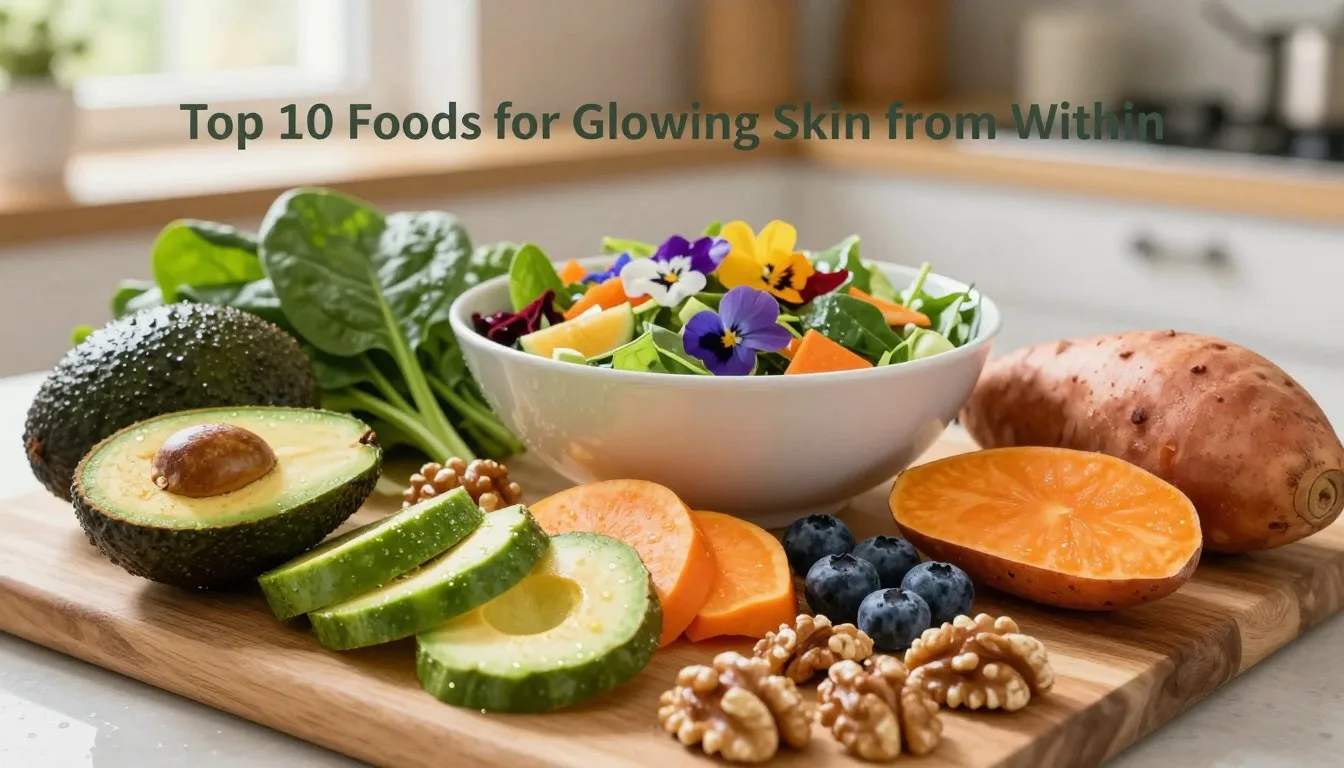
Can what you eat really outshine a high-end serum?
Skincare is important, but your glow starts from within. This guide shows how food and skincare work together. You’ll learn glowing skin tips and natural beauty tips for a busy life in the United States.
✨ Quick Start: If you’re looking for immediate daily habits to pair with your diet, don’t miss our [Simple Tips for a Luminous Look] to start seeing results on the surface today.“
By following these food steps, you’ll see better hydration, less inflammation, and stronger collagen. You’ll also have fewer breakouts and a more even, dewy complexion. Focus on whole foods like fatty fish, avocado, and leafy greens. Also, drink plenty of water and snack smart.
Key Takeaways
- A glowing skin diet complements topical care for lasting results.
- Eating anti-inflammatory, nutrient-dense foods can reduce redness and breakouts.
- Omega-3s, antioxidants, and probiotics support hydration and collagen.
- Small daily habits—hydration, meal timing, and healthy snacks—boost skin health.
- This guide offers practical, U.S.-friendly tips you can start today.
“ Aesthetic Goals: Eating right is the foundation of the ‘Clean Girl’ and ‘Dewy’ looks. If you want to see how these nutritional habits fit into a complete beauty routine, check out our guide on [Achieve a Glowing Skin Aesthetic in 5 Steps].”
Why your diet matters for a radiant complexion
Your diet greatly affects your skin’s health. Foods provide nutrients, fats, and antioxidants. These help build tissue, lock in moisture, and protect cells. Combining a good skincare routine with healthy eating boosts results faster than using products alone.
“ Don’t Forget the Outside: While eating right builds the foundation, a structured skincare routine locks that glow in. Pair your healthy diet with our [Ultimate 15-Step Guide to Naturally Glowing Skin] for the most comprehensive beauty strategy.”
How food affects skin health
Proteins are key for collagen and elastin, keeping skin firm. Fats from foods like salmon and walnuts help keep moisture in. Antioxidants in berries and green tea fight off aging signs.
Your diet also impacts your gut health. A healthy gut means less inflammation, which can cause redness and dullness. This shows how what you eat affects your skin.
Links between nutrients and skin repair
Vitamin C is vital for collagen and repairing skin. Vitamin A helps cells renew, reducing acne and blemishes. Vitamin E protects skin cells and keeps them healthy.
Omega-3 fatty acids reduce inflammation and keep skin hydrated. Zinc helps wounds heal and controls acne. Polyphenols from green tea and dark chocolate offer antioxidant benefits. These connections are backed by dermatology and nutrition experts.
What to expect when you change your diet
Some benefits are quick. You might see better hydration and less puffiness in days to weeks. Structural changes like collagen remodeling take longer, often six to twelve weeks.
Changing your diet can cause short-term digestive issues. If you have allergies or health conditions, talk to a doctor before making big changes.
| Nutrient | Skin Role | Food Sources |
|---|---|---|
| Vitamin C | Collagen synthesis and repair | Oranges, strawberries, bell peppers |
| Vitamin A | Cell turnover and texture | Sweet potatoes, carrots, spinach |
| Vitamin E | Barrier protection and moisture retention | Almonds, sunflower seeds, avocado |
| Omega-3 fatty acids | Reduce inflammation; improve hydration | Salmon, mackerel, chia seeds |
| Zinc | Wound healing; acne modulation | Oysters, beef, pumpkin seeds |
| Polyphenols | Antioxidant protection and inflammation control | Green tea, berries, dark chocolate |
Glowing skin tips: quick dietary habits to start today
Small changes in your diet can make your skin look better fast. Start with simple, easy-to-follow habits. These tips will help you get fresher, more resilient skin quickly.
Daily habits that support skin glow
Eat half your plate with colorful fruits and veggies at every meal. This gives you vitamins and antioxidants that protect and repair your skin. Choose whole foods over processed snacks and add healthy fats like avocado or olive oil to help your skin’s barrier.
Try to limit foods high in added sugars and high-glycemic foods. They can cause breakouts and inflammation. Eating regular meals helps keep your hormones and blood sugar stable, which is good for clear skin. These beauty hacks make it easier to stick to healthy habits.
“ Complement Your Habits: A glowing skin diet works best when supported by the right external care. Discover the easiest [Skincare Tips for Glowing Skin] that won’t take more than 5 minutes of your morning routine.”
Hydration strategies for dewy skin
Drink about 2–3 liters of water a day, depending on how active you are and where you live. Drink water all day, not just in one big gulp. Also, eat hydrating foods like cucumber, watermelon, and oranges to get more water from your food.
After working out, choose drinks with electrolytes if you sweat a lot to balance your body. Cut down on too much alcohol and caffeine, as they can dry out your skin. Drinking enough water helps your skin look better and makes moisturizers work better.
Meal timing and skin-friendly snacking
Don’t skip breakfast. Start with protein and healthy fats, like Greek yogurt with berries or a nut butter smoothie. This keeps your blood sugar steady and helps your skin stay clear.
Make simple snacks ahead of time to avoid bad choices. Good snacks include almonds, carrot sticks with hummus, or plain yogurt with blueberries. These small changes can make a big difference in your skin health.
Fatty fish and omega-3s for supple, hydrated skin
Adding fatty fish to your diet can make your skin glow. These fish are packed with EPA and DHA. They feed your skin cells, keeping them moist and radiant.
Which fish to choose and why
Choose salmon, mackerel, sardines, trout, or herring for their high EPA and DHA. Wild-caught salmon and sardines are especially nutritious. For affordable options, try canned wild salmon or sardines.
When buying fish, look for sustainable choices. Guides like Marine Stewardship Council and Monterey Bay Aquarium Seafood Watch can help. Sustainable fishing protects our oceans and keeps nutrients available for the future.
How omega-3s reduce inflammation and fine lines
EPA and DHA help control inflammation and lower cytokine activity. This can reduce redness and soothe irritated skin.
These omega-3s also strengthen the skin barrier. A stronger barrier helps your skin keep water in, reducing dryness and fine lines over time.
Simple recipes and serving suggestions
Aim for two to three servings of fatty fish each week. This supports your glowing skin diet.
Try broiled salmon with lemon and herbs, topped with olive oil. For sardines, mash with avocado and lemon, then spread on whole-grain toast. This makes a quick snack that boosts your skin’s glow.
Make a quick mackerel salad with mixed greens, cherry tomatoes, and mustard vinaigrette. Use gentle cooking methods like baking or steaming to protect the omega-3s.
| Fish | Key Omega-3 Benefit | Serving Idea |
|---|---|---|
| Salmon (wild-caught) | High EPA/DHA to boost skin hydration | Broiled with lemon and dill; 3 oz portion |
| Mackerel | Rich in omega-3s that reduce inflammation | Pan-seared, flaked into salads |
| Sardines (canned wild) | Affordable, nutrient-dense source of DHA | Sardine toast with avocado on whole-grain bread |
| Trout | Good EPA/DHA balance for skin barrier support | Baked with herbs and a squeeze of lemon |
| Herring | Concentrated omega-3s for moisture retention | Lightly smoked or pickled with crisp salad |
Avocado: healthy fats and antioxidants for elasticity
Avocado is a simple way to support skin elasticity and suppleness. Its creamy texture hides a powerful nutrient mix. This mix helps protect cells and hydrate from the inside out. Use these ideas as part of healthy skin habits and glowing skin tips you can stick with.
Nutrients that feed your skin
Avocado delivers monounsaturated fats, mainly oleic acid. This strengthens the lipid barrier and helps maintain elasticity. Vitamin E acts as an antioxidant that shields skin lipids from oxidative stress.
Vitamin C supports collagen production for firmer tissue. Lutein and zeaxanthin add antioxidant defense. Potassium aids cellular hydration.
Practical ways to add avocado to meals
Start by spreading mashed avocado on whole-grain toast with tomato and a squeeze of lemon for a quick, skin-friendly breakfast. Blend half an avocado into fruit or green smoothies to create a creamy texture without dairy. Dice avocado into salads for a nutrient-dense boost that keeps you full longer.
You can also whisk avocado into dressings or sauces to replace mayonnaise or butter in recipes. For calorie balance, aim for about half an avocado per serving. This gives skin-supportive fats without excess calories.
| Use | Serving | Skin benefit |
|---|---|---|
| Toast with avocado, tomato, lemon | ½ avocado | Provides oleic acid and vitamin C for barrier support and collagen |
| Smoothie with avocado and spinach | ½ avocado | Creates creamy texture, adds lutein and potassium for hydration |
| Diced in mixed salad | ½ avocado | Boosts vitamin E and healthy fats to protect skin lipids |
| Replacement for mayo or butter | 2 Tbsp mashed | Reduces saturated fat while delivering antioxidants |
Leafy greens for detoxification and vitamin boost
Leafy greens are packed with vitamins and minerals that make your skin glow. They help remove toxins, reduce swelling, and repair your skin. Adding them to your diet is a simple way to improve your skin.
Kale, spinach, Swiss chard, collard greens, and arugula are full of vitamins A, C, K, folate, iron, calcium, and magnesium. Microgreens and watercress have even more nutrients in smaller amounts. Eating at least one to two cups cooked or two to three cups raw daily helps repair and tone your skin.
Preparation matters. Massage kale with lemon juice or olive oil to make its nutrients easier to absorb. Steaming spinach quickly helps keep its vitamins intact, unlike boiling for too long.
Mixing greens into smoothies is a great way to get more without changing your meals much. Adding healthy fats like avocado or olive oil helps your body absorb vitamins better. This makes your skin look fuller and more even.
Try different greens in your meals to keep things interesting. Add arugula to salads, Swiss chard to omelets, or watercress to sandwiches. This adds flavor and nutrients that help your skin stay radiant.
Adding greens to your diet every day can make a big difference. Regularly eating them helps your skin improve over time, not just overnight.
Berries for antioxidant protection and collagen support

Berries are full of compounds that protect and support your skin. They contain vitamin C, anthocyanins, ellagic acid, and polyphenols. These nutrients shield your skin from damage and boost repair.
Top berries and their skin-protecting compounds
Blueberries have anthocyanins that fight oxidative stress. Strawberries are packed with vitamin C, which helps collagen. Raspberries have ellagic acid to reduce UV damage. Blackberries offer vitamin C and flavonoids for better skin tone.
How antioxidants fight free radicals that dull skin
Free radicals come from UV, pollution, and metabolism. They harm collagen and elastin, causing dullness and lines. Antioxidants stop these radicals, slowing collagen loss and keeping skin elastic.
Vitamin C is key. It fights oxidative stress and helps build collagen. Eating berries regularly gives you a steady vitamin C boost.
Easy berry-forward breakfasts and snacks
Start with Greek yogurt, mixed berries, and honey for protein and vitamin C. Try overnight oats with raspberries for a quick breakfast. Blend frozen berries, spinach, and protein for a bright smoothie.
For a quick dessert, puree frozen berries into a sorbet. Use fresh or frozen berries all year to keep your skin bright.
These tips are easy to follow. Adding berries daily can make your skin look bright, plump, and resilient.
Nuts and seeds for vitamin E and skin barrier support
Small changes today can lead to better skin tomorrow. Nuts and seeds are full of vitamin E, omega-3s, and minerals. They help strengthen your skin and reduce inflammation. These are easy beauty hacks to add to your routine.
Which choices give the biggest payoff?
Almonds and sunflower seeds are rich in vitamin E, which protects your skin. Walnuts and ground flaxseeds have ALA omega-3s that fight inflammation. Hazelnuts add healthy fats and flavor. Chia seeds offer fiber and a gel-like texture that’s good for digestion and skin.
How much is right?
Try a small handful of nuts, about one ounce, or 1–2 tablespoons of seeds daily. This amount gives you vitamin E, healthy fats, and plant protein without too many calories. If you’re allergic to tree nuts, pumpkin seeds and hemp seeds are great alternatives for healthy skin.
Easy ways to add them to your day
- Sprinkle chia or flax on oatmeal or yogurt for a crunch and thicker texture.
- Blend almond or peanut butter into smoothies for creaminess and satiety.
- Chop walnuts over salads or roasted vegetables to add omega-3s.
- Mix a controlled portion of mixed nuts and seeds for a portable trail mix snack.
These small steps are easy tips for glowing skin. Combine them with staying hydrated and protecting your skin from the sun for even better results. Use these beauty hacks regularly to support a stronger skin barrier and a more resilient complexion.
Sweet potatoes and beta-carotene for natural glow
Sweet potatoes are a tasty way to get a radiant complexion. They are full of beta-carotene, fiber, and potassium. Adding them to meals makes your glowing skin diet more enjoyable.
How beta-carotene converts to skin-protecting vitamin A
Your body turns beta-carotene into retinol (vitamin A). Retinol helps with cell turnover and keeps mucous membranes healthy. It also supports skin repair after damage.
Eating foods rich in beta-carotene supports your skin without the risks of high-dose supplements. Sweet potatoes are a great choice for natural beauty tips that focus on food.
Cooking methods that maximize nutrient retention
Beta-carotene is fat-soluble. Pair sweet potatoes with healthy fats like olive oil, butter, or avocado for better absorption. Roasting, steaming, or sautéing gently keeps nutrients in.
Try baking wedges with olive oil and rosemary, mashing with olive oil and herbs, or adding cubes to grain bowls. These methods help keep beta-carotene and fit into a radiant complexion routine.
Include sweet potatoes in your diet three times a week. This keeps meals balanced and interesting, following natural beauty tips.
| Preparation | Why it works | Easy serving idea |
|---|---|---|
| Roasted wedges | Dry heat concentrates flavor, preserves beta-carotene; pairs well with oil for absorption | Toss with olive oil, roast at 400°F, finish with fresh thyme |
| Steamed cubes | Gentle cooking minimizes nutrient loss and keeps texture soft | Steam until tender, mix into salads or grain bowls with avocado |
| Light sauté | Quick heat with a bit of fat enhances absorption and retains color | Sauté with garlic and spinach, serve over quinoa |
| Mashed | Simple preparation that pairs easily with fats and seasonings for better uptake | Mash with olive oil, lemon zest, and chives as a side |
Tomatoes and lycopene for UV protection and tone
Tomatoes can protect your skin and even out your tone. They contain lycopene, a carotenoid and antioxidant. Studies show that eating tomatoes can reduce UV-induced redness and improve skin texture.

Cooked tomatoes have more lycopene than raw ones. Adding healthy fats to tomato dishes boosts lycopene absorption. This turns tomatoes into a skin-supporting food for your daily routine.
Benefits of lycopene for evening skin tone
Lycopene fights off reactive oxygen species that cause hyperpigmentation and uneven texture. Eating cooked tomato dishes a few times a week can reduce sun redness and even out your tone. This, along with other glowing skin tips, can improve your complexion.
Best ways to prepare tomatoes to increase lycopene availability
Cook tomatoes gently to release more lycopene. Tomato sauces, stews, and soups are rich in lycopene and easy to add to meals. Roasting tomatoes with olive oil makes them flavorful and boosts absorption.
Try to eat about half a cup of cooked tomatoes a few times a week. Pair these servings with leafy greens and healthy proteins for better skincare benefits.
| Preparation | How it boosts lycopene | Serving idea |
|---|---|---|
| Tomato sauce (simmered) | Heat breaks down cell walls, increasing bioavailability | Half-cup over whole-grain pasta or grilled salmon |
| Roasted tomatoes with olive oil | Fat from oil enhances lycopene absorption | Roast cherry tomatoes and toss with arugula salad |
| Stewed tomatoes | Long, low heat concentrates lycopene and flavor | Stew into chili or vegetable ragout |
| Tomato soup (pureed) | Pureeing plus heat makes lycopene easy to absorb | Bowl with a drizzle of olive oil and whole-grain toast |
Green tea and polyphenols for calming and brightening skin
Green tea is a gentle way to calm irritation and add glow. Its polyphenols, especially epigallocatechin gallate (EGCG), lower inflammation and protect cells from oxidative stress. Adding it to your skincare routine can subtly improve redness and tone.
Polyphenols help control inflammation and protect against UV damage. EGCG and other catechins reduce sebum in oily skin and soothe flushing. Drinking it regularly and applying it topically can help your skin from the inside and outside.
Drink two to three cups of green tea daily for skin benefits, but be mindful of caffeine sensitivity. If you can’t handle caffeine, try decaf green tea or brew it weakly. Always check with your doctor before using concentrated extracts or supplements.
Make green tea a part of your day with creative beauty hacks. Enjoy it iced with lemon and mint for hydration, whisk matcha into unsweetened almond milk for a latte, or blend cooled green tea into smoothies for a nutrient boost.
Topical uses can also enhance your skincare routine. After patch-testing, use cooled green tea as a facial rinse or mix it into a clay mask for extra antioxidants. These simple steps can easily be added to your skincare routine for brighter, calmer skin.
| Use | How to do it | Benefits for skin |
|---|---|---|
| Daily tea | Drink 2–3 cups of green tea, or decaf if sensitive | Provides steady EGCG intake to reduce redness and oxidative stress |
| Matcha latte | Whisk 1 tsp matcha into unsweetened plant milk | Concentrated antioxidants with lower liquid volume for convenience |
| Iced green tea | Brew strong, cool, add lemon and fresh mint | Hydration plus brightening vitamin C from lemon |
| Smoothie boost | Use cooled brewed green tea as liquid in smoothies | Delivers polyphenols alongside fruit nutrients |
| Facial rinse | Cool brewed tea and apply with a cotton pad after cleansing | Soothes redness and reduces surface oil without harsh chemicals |
| Clay mask mix | Combine powdered clay with cooled green tea to form a paste | Antioxidant-rich topical treatment for brighter tone |
Probiotic-rich foods for gut-skin connection
Your gut and skin are connected through immune signals and nutrient absorption. A balanced gut microbiome improves digestion and boosts vitamin and fatty acid use. This can reduce acne, calm redness, and lead to clearer skin over time.
Why a healthy gut helps your complexion
An imbalanced gut microbiome can increase inflammation and weaken your immune system. This can worsen acne, rosacea, and eczema, and slow down skin repair. A healthy gut helps control inflammation, improves nutrient uptake, and strengthens the skin barrier.
Top probiotic foods and how to include them in meals
Choose foods with live cultures and pair them with prebiotic fibers. Try plain yogurt, kefir in smoothies, sauerkraut or kimchi in grain bowls, miso in soups, tempeh in stir-fries, and kombucha as a refreshing drink. Add onions, garlic, asparagus, or bananas to enhance the benefits.
Signs your gut and skin are improving
Look for fewer breakouts, less redness, and softer, more even skin. Improved digestion, reduced bloating, and steady energy are signs of progress. Changes take weeks to months, so keep track and consult experts if issues continue.
Use these natural beauty tips and skincare secrets alongside diet changes for better results. Small habits like a kefir smoothie or a miso lunch can be powerful for glowing skin.
| Probiotic Food | How to Add It | Prebiotic Pairing |
|---|---|---|
| Yogurt (live cultures) | Yogurt bowl with fruit and seeds for breakfast | Banana or sliced onion in savory bowls |
| Kefir | Mixer for smoothies with berries and spinach | Asparagus or oats in side dishes |
| Sauerkraut / Kimchi | Topping for grain bowls or kimchi fried rice | Garlic in the main dish |
| Miso | Quick miso soup or miso-glazed vegetables | Leeks or onions in soups |
| Tempeh | Stir-fry or marinated tempeh tacos | Garlic or asparagus sides |
| Kombucha | Cold sip between meals or with light snacks | Fruit-based snacks like banana or apple |
You’ve learned about foods that help your skin glow. These include fatty fish, avocado, leafy greens, berries, nuts, sweet potatoes, tomatoes, green tea, and probiotics. Adding these to your diet and following simple habits can make your skin radiant.
Start by making small changes. Add a new food each week, drink more water, and choose healthier snacks. For a simple plan, focus on hydration and greens first. Then, add fatty fish and avocado, followed by berries and nuts, and finish with probiotics and green tea.
Remember, diet is just one part of caring for your skin. Good skincare and habits like sleep, sun protection, and managing stress are also key. Be patient, as results come over time. Consistency is key for lasting benefits. I have compiled the best products that I have carefully reviewed for glowing skin on the [Skincare Picks] page.
If you need personalized advice, talk to a registered dietitian or dermatologist. You can also check out the American Academy of Dermatology and the Academy of Nutrition and Dietetics for reliable information on skin and nutrition.
FAQ
How quickly will I see glowing skin after changing my diet?
You might see improvements like better hydration and less puffiness in days to weeks. For deeper changes like improved collagen and texture, it takes 6–12 weeks. This is with consistent eating and a good skincare routine.
Which foods deliver the fastest results for a radiant complexion?
Eat hydrating foods like fatty fish, berries, leafy greens, and hydrating fruits. These foods are rich in nutrients. Adding them to your diet, along with more water and less sugar, can show results quickly.
How much oily fish should I eat for skin benefits?
Eat two to three servings of fatty fish like salmon, mackerel, or sardines a week. These fish have omega-3s that help your skin over time.
Can plant-based eaters get the same benefits as people who eat fish?
Yes. Plant-based eaters can get benefits from foods like walnuts, chia, and flaxseed. They can also use algae-based omega-3 supplements. Eating a variety of fruits, vegetables, nuts, and seeds is key.
How do antioxidants from berries and tomatoes protect my skin?
Antioxidants in berries and tomatoes fight off damage from UV rays and pollution. They help keep your skin bright and even-toned when eaten regularly.
Are there easy daily habits I can start right away for glowing skin?
Yes. Eat colorful fruits and veggies at every meal. Add healthy fats like avocado and olive oil. Drink water all day and choose whole foods over processed ones. Prep healthy snacks like yogurt with berries or nuts.
How much water should I drink to support dewy skin?
Drink 2–3 liters of water a day, depending on your activity and climate. Include hydrating foods and electrolyte drinks after exercise. Drinking enough water helps your skin look dewy.
What role do probiotics play in complexion improvement?
Probiotics help keep your gut healthy, which can improve your skin. Eating foods like yogurt, kefir, and sauerkraut can lead to clearer skin over time.
How should I prepare tomatoes to get the most lycopene?
Cooking tomatoes increases lycopene absorption. Pair them with olive oil for better absorption. Eating cooked tomatoes several times a week is beneficial.
Are nuts and seeds safe if I have allergies?
If you have allergies, avoid certain nuts and seeds. Choose alternatives like pumpkin seeds or hemp seeds if you can. Always follow your allergist’s advice. For skin benefits, also eat foods like avocado and olive oil.
Can green tea be used topically for skin benefits?
Green tea has antioxidants that are good for your skin. Drinking 2–3 cups a day is beneficial. Some people use cooled green tea as a facial rinse or in masks, but always test it first.
How do I balance calories while adding high-fat, skin-supportive foods like avocado and nuts?
Use portion control with foods like avocado and nuts. Replace less healthy fats with them. Combine them with veggies and lean proteins for balanced meals.
Will reducing sugar improve my skin quickly?
Cutting down on sugar can help reduce inflammation and acne. Many people see fewer breakouts and less redness within weeks. This is especially true with consistent hydration and nutrient-rich meals.
When should I consult a professional about diet and my skin?
See a dermatologist or registered dietitian for persistent skin issues or complex dietary needs. They can create a personalized plan and check for nutrient deficiencies.
2 thoughts on “Top 10 Foods for Glowing Skin from Within”