

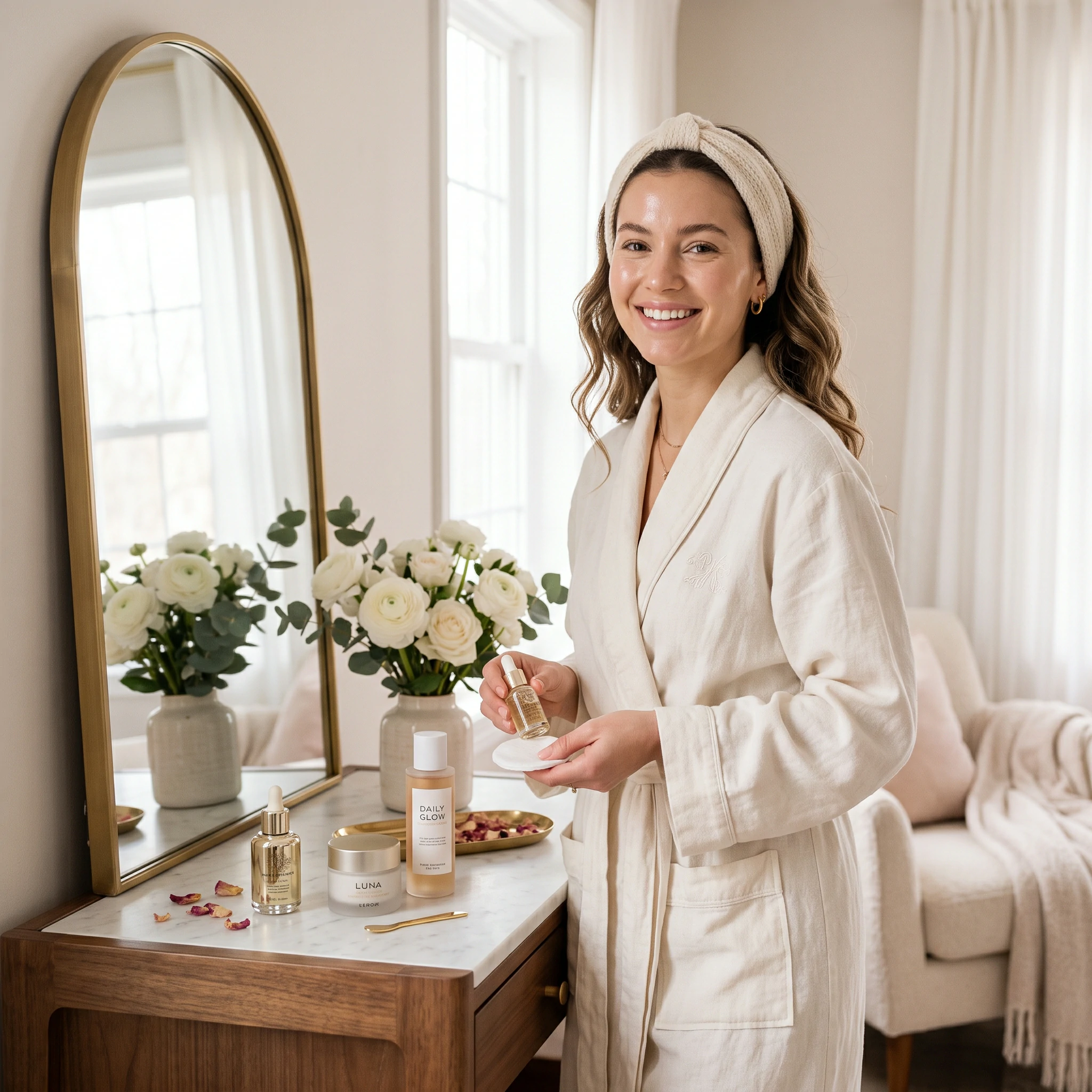
Starting a beginner skincare routine can feel overwhelming. There are cleansers, toners, serums, exfoliants, retinol, moisturizers, sunscreen—and hundreds of products promising better, brighter, younger-looking skin.
But here’s the truth: you don’t need a 10-step skincare routine to take good care of your skin.
If you’re new to skincare, the best approach is to start with a few essential products, learn the correct skincare routine order, and stay consistent.
This beginner-friendly guide will show you exactly how to start a skincare routine, what products you actually need, and how to build a simple morning and nighttime skincare routine based on your skin type.
What Is a Beginner Skincare Routine?
A beginner skincare routine is a simple series of steps designed to cleanse, hydrate, and protect your skin without overwhelming it with too many products.
For most beginners, the foundation is surprisingly simple:
- Cleanser
- Moisturizer
- Sunscreen during the day
The American Academy of Dermatology recommends keeping skincare simple and emphasizes cleansing, moisturizing, and sun protection as important basics.
Once your skin becomes comfortable with these basics, you can gradually introduce targeted products such as vitamin C, niacinamide, exfoliants, or retinoids depending on your specific skin concerns.
Remember: more products don’t necessarily mean better skin. Consistency matters more than having a complicated routine.
Beginner Skincare Routine: Step-by-Step
Let’s break down the ideal skincare routine steps for beginners.

Step 1: Cleanse Your Face
The first step in your basic skincare routine is cleansing.
A gentle facial cleanser helps remove dirt, excess oil, sweat, makeup, and other buildup from your skin.
How to use a cleanser
Wet your face with lukewarm water, apply a small amount of cleanser, and gently massage it into your skin. Rinse thoroughly and pat your face dry.
Avoid aggressive scrubbing because it can irritate your skin.
If your skin is dry or sensitive, you may find that cleansing once in the evening is enough, while other skin types may prefer cleansing morning and night. The AAD recommends limiting face washing to twice daily and after sweating.
What to look for in a beginner cleanser
Look for a cleanser that is:
- Gentle
- Appropriate for your skin type
- Non-abrasive
- Comfortable after rinsing
- Fragrance-free if your skin is sensitive
Your face should feel clean—not tight, dry, or uncomfortable.
Step 2: Add a Treatment or Serum — Optional
This step is optional for beginners.
You don’t need a serum to have an effective skincare routine.
However, once you’ve established your basic routine, you can introduce a serum designed to address a specific concern.
For example:
For dull-looking skin
Consider ingredients such as vitamin C.
For dehydration
Look for hydrating ingredients such as hyaluronic acid.
For excess oil
Niacinamide may be a useful ingredient to consider.
For signs of aging
Retinoids are commonly used to target concerns such as fine lines and uneven skin texture, but beginners should introduce them gradually.
The important rule is:
Start with one active ingredient at a time.
Adding multiple new products simultaneously makes it difficult to know which product is helping—or causing irritation.
Dermatologists also caution against using too many anti-aging products at once because irritation can make skin concerns more noticeable.
Step 3: Moisturize
Moisturizer is an important part of almost every skincare routine for beginners.
Even if you have oily skin, you still need hydration.
A moisturizer helps support the skin barrier and reduce moisture loss.
Choose your moisturizer based on your skin type
Dry skin: Look for richer creams containing hydrating and barrier-supporting ingredients.
Oily skin: Try a lightweight gel or lotion that feels comfortable and doesn’t leave your skin excessively greasy.
Combination skin: A lightweight moisturizer can work well, with extra hydration added to drier areas if needed.
Sensitive skin: Look for simple, fragrance-free formulas designed for sensitive skin.
If you’re unsure about your skin type, pay attention to how your skin feels after cleansing. Dry, flaky, oily, combination, and sensitive skin can each require slightly different product textures.
Step 4: Sunscreen — The Most Important Morning Step
If there’s one step you should not skip in your morning skincare routine, it’s sunscreen.
Choose a broad-spectrum sunscreen with SPF 30 or higher.
Sunscreen helps protect your skin from ultraviolet radiation and can help reduce premature signs of skin aging. Dermatologists recommend broad-spectrum SPF 30+ protection as part of daily skin care.
How to apply sunscreen
Apply sunscreen as the final step of your morning skincare routine, before makeup.
If you’re spending time outdoors, sunscreen generally needs to be reapplied approximately every two hours and after swimming or sweating.
If you’re concerned about white cast, especially on deeper skin tones, you may want to explore tinted sunscreen options.
Your Simple Morning Skincare Routine
Now let’s put everything together.
A beginner-friendly morning skincare routine can look like this:
☀️ Morning
Step 1: Gentle cleanser
↓
Step 2: Optional serum
↓
Step 3: Moisturizer
↓
Step 4: Broad-spectrum SPF 30+ sunscreen
↓
Step 5: Makeup, if desired
You don’t need every optional step.
If you’re completely new to skincare, start with:
Cleanser → Moisturizer → Sunscreen
That’s enough to establish a strong foundation.
The AAD similarly recommends cleansing followed by moisturizer and/or sunscreen, with makeup applied afterward.
Your Simple Nighttime Skincare Routine
Your nighttime skincare routine is slightly different because you don’t need sunscreen.
🌙 Night
Step 1: Remove makeup and sunscreen
↓
Step 2: Gentle cleanser
↓
Step 3: Optional treatment or serum
↓
Step 4: Moisturizer
If you’re using a treatment product, follow its specific directions.
For beginners, there’s no need to introduce multiple active ingredients at once.
A simple routine you can follow consistently is usually better than a complicated routine you abandon after a week.
Skincare Routine Order: What Goes First?
One of the most common questions beginners ask is:
“What order should I apply my skincare products?”
A simple rule is to move from cleansing to treatment, then hydration and protection.
Morning skincare routine order:
- Cleanser
- Treatment/serum
- Moisturizer
- Sunscreen
- Makeup
Night skincare routine order:
- Makeup/sunscreen removal
- Cleanser
- Treatment/serum
- Moisturizer
The American Academy of Dermatology recommends cleansing first, followed by medication or treatment, then moisturizer and/or sunscreen.
How to Build a Skincare Routine Based on Your Skin Type
The best skincare routine isn’t necessarily the routine that’s trending on social media.
It’s the one that works with your skin type and concerns.
Skincare Routine for Dry Skin
If your skin feels tight, rough, flaky, or uncomfortable, focus on hydration and protecting your skin barrier.
A simple routine could include:
- Gentle cleanser
- Hydrating serum
- Cream moisturizer
- Broad-spectrum SPF 30+
Avoid over-cleansing and excessive exfoliation.
Skincare Routine for Oily Skin
Oily skin can benefit from lightweight products.
Look for:
- Gentle cleanser
- Lightweight moisturizer
- Non-comedogenic products
- Broad-spectrum sunscreen
Don’t make the mistake of trying to completely “dry out” oily skin. Harsh cleansing can lead to irritation.
Skincare Routine for Combination Skin
Combination skin often means having oilier areas—such as the T-zone—and drier areas elsewhere.
A lightweight moisturizer and gentle cleanser can provide a good starting point.
You can adjust product textures depending on how different areas of your face feel.
Skincare Routine for Sensitive Skin
If your skin easily becomes irritated, keep your routine especially simple.
Consider:
- Gentle cleanser
- Fragrance-free moisturizer
- Broad-spectrum sunscreen
Introduce new products one at a time and give your skin time to adjust.
Fragrance-free products can be a useful choice for people with sensitive skin because added fragrances may trigger irritation or allergic reactions.
Do Beginners Need Toner?
Not necessarily.
Toner can be useful for some people, but it isn’t an essential step in a beginner skincare routine.
If your routine already includes a cleanser, moisturizer, and sunscreen, you can skip toner while you’re learning what works for your skin.
This is another reason not to feel pressured into buying every skincare product you see online.
Do Beginners Need Exfoliation?
Exfoliation can help remove dead skin cells, but more is not better.
Over-exfoliating may cause dryness, irritation, redness, or a damaged skin barrier.
If you’re new to skincare, establish your basic routine first.
Once your skin is comfortable, you can consider introducing an exfoliating product based on your specific skin concerns.
When Should You Add Retinol?
Retinol and other retinoids can be useful for certain skin concerns, including acne and signs of aging, but they are not necessary on day one.
If you’re considering a retinoid, introduce it gradually and follow product directions. If you have persistent skin concerns or aren’t sure which treatment is appropriate, consider speaking with a dermatologist.
Your first goal isn’t to have the most advanced skincare routine.
Your first goal is to build a routine your skin tolerates and that you can consistently follow.
Common Beginner Skincare Mistakes to Avoid
Starting a skincare routine is exciting, but there are several mistakes beginners commonly make.
1. Buying Too Many Products
You don’t need a bathroom shelf full of serums.
Start with the basics and add products slowly.
2. Changing Your Routine Every Week
Your skin needs time to adjust.
Constantly switching products makes it difficult to determine what works for you.
3. Skipping Sunscreen
A great skincare routine is incomplete without daytime sun protection.
4. Over-Exfoliating
Using multiple exfoliating products can irritate your skin.
5. Copying Someone Else’s Routine
Your favorite influencer may have completely different skin from you.
Instead, choose products according to your skin type and concerns.
6. Expecting Overnight Results
Healthy-looking skin takes time.
Consistency is one of the most important parts of any simple skincare routine.
How Long Does It Take to See Skincare Results?
There’s no universal timeline for skincare results.
Some products can make your skin feel more hydrated relatively quickly, while concerns such as acne, uneven tone, or signs of aging may take longer to improve.
Instead of constantly checking your skin every morning, focus on following your routine consistently.
Take occasional photos under similar lighting if you want to monitor gradual changes.
The Best Beginner Skincare Routine Is Simple
If you’re still confused about where to start, don’t overthink it.
Your first beginner skincare routine can be:
Morning
Cleanser → Moisturizer → SPF 30+
Night
Cleanser → Moisturizer
That’s it.
After you’ve consistently followed this routine and your skin feels comfortable, you can introduce one targeted product based on your biggest concern.
This simple approach can help you avoid irritation, unnecessary spending, and the confusion that comes with trying too many products at once.

Beginner Skincare Routine Checklist
Save this checklist for your next skincare shopping trip:
☐ Gentle facial cleanser
☐ Moisturizer suitable for your skin type
☐ Broad-spectrum SPF 30+ sunscreen
☐ Optional hydrating serum
☐ Optional targeted treatment
☐ Makeup remover if necessary
Start simple. Stay consistent. Add slowly.
Your skincare routine doesn’t have to be complicated to be effective.
Final Thoughts
Building a skincare routine for beginners doesn’t have to be overwhelming.
Start with the fundamentals: cleanse, moisturize, and protect your skin from the sun.
Once you’ve established those habits, you can gradually add products designed to address specific concerns such as dryness, acne, dullness, dark spots, or signs of aging.
And remember: the “best skincare routine” isn’t the one with the most products.
It’s the one you can realistically follow every day while keeping your skin comfortable and protected.
If you’re just starting your skincare journey, keep it simple, pay attention to how your skin responds, and give your routine time.
Your future skin will thank you. ✨
Disclaimer: This article is for general educational purposes and isn’t a substitute for personalized medical advice. If you have persistent, painful, or concerning skin problems, consult a qualified dermatologist.